
Fitch Solutions sees RBI keeping benchmark interest rates unchanged during the fiscal to March 2022 following its decision to buy Rs 1 lakh crore of government bonds. "We had initially expected another policy rate cut to arrest the rise in government bond yields since the Union Budget announcement in February. "However, having an explicit bond purchase guidance from the RBI following the announcement of the G-SAP will also achieve a similar effect, if not even be more effective than a rate cut on capping the increase in bond yields," it said in a note. The Reserve Bank of India (RBI) held its policy repurchase (repo) rate unchanged at 4 per cent at its monetary policy meeting on April 7.
.jpg)
India's economy grew 4.7 per cent in 2013-14, following an expansion of 4.5 per cent in 2012-13. In the fourth quarter of 2013-14, growth remained subdued at 4.6 per cent, mainly due to a decline in manufacturing and mining output.

The RBI left interest rates unchanged, saying there was no substantial development on inflation or fiscal fronts to warrant a fresh reduction.

A monsoon deficit is likely to affect the agriculture output, which could have an impact on the food inflation

The Reserve Bank's growth projection for next financial year is lower than 8-8.5 per cent projected by the finance ministry in the recent Economic Survey which was tabled in Parliament on January 31. Unveiling the bi-monthly policy, RBI governor Shaktikanta Das said, "Recovery in domestic economic activity is yet to be broad-based, as private consumption and contact-intensive services remain below pre-pandemic levels."

Raghuram Rajan, who was Chief Economic Advisor in the Finance Ministry before taking over as RBI Governor on September 4, is scheduled to announce the next mid-quarter policy review on December 18.

The Indian economy will expand by 5.6 per cent during 2014-15 even as the Reserve Bank is not likely to cut interest rates this year, according to Ficci's latest Economic Outlook Survey.
Financial services firm AnandRathi analysed the key points of the policy soon after it was announced.
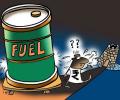
The wholesale price-based inflation accelerated to a record high of 12.94 per cent in May, on rising prices of crude oil and manufactured goods. Low base effect also contributed to the spike in WPI inflation in May 2021. In May 2020, WPI inflation was at (-) 3.37 per cent. This is the fifth straight month of uptick seen in the wholesale price index (WPI)-based inflation. In April, 2021, WPI inflation hit double digit at 10.49 per cent. "The annual rate of inflation, based on monthly WPI, was 12.94 per cent for the month of May, 2021 (over May, 2020) as compared to (-) 3.37 per cent in May 2020.

The latest reading from the Organisation for Economic Cooperation and Development comes amid rising concerns about India's growth prospects on account of the falling rupee and relatively sluggish investments.

'Very few of small investors stay invested for those three or four or five years.' 'If there's like a six month, one-year period when market is not doing well, you exit.' 'After the market has run up, you get in again.' 'This way you will never make returns.'

'The more retail investors keep away from speculative activity, the more they will manage their risks better.'

Pulses cropping has jumped to 39.4 per cent above 2015 levels.

The RBI had lowered policy rates by 0.50 per cent between January-March to prop up economic growth.

US defence giant Boeing warned of a price hike in USD 2.5 billion deal if India does not finalise the contract soon.

The growth in the contact-intensive portion of the economy trailed our expectation, highlighting how imperative it is for confidence to improve, either through accelerated vaccinations or otherwise, to drive a sustainable recovery in these sectors, asserts Aditi Nayar.

The headline HSBC India Purchasing Managers' Index -- a composite gauge designed to give a single-figure snapshot of manufacturing business conditions -- stood at 54.5 in December, up from 53.3 in the prior month.

The revision was announced before Indian markets opened on Thursday.

As Unilever's COO, he is expected to take significant load off CEO Alan Jope, pushing growth across markets and driving go-to-market activities.

Total fuel subsidies accounted for less than 1 per cent of GDP and under 3 per cent of total government expenditures in FY14.

The disruptions caused by COVID-19 have more severely impacted small and mid-sized corporates, including NBFCs and MFIs, in terms of access to liquidity.

Metal prices from copper to aluminum and tin have shot up by about 7-32 per cent in the past three months.

Getting out of the zero-rate armchair was overdue, and many in the market will be glad it has finally happened

The HSBC Emerging Markets Index, a monthly indicator derived from Purchasing Managers' Index surveys, inched up to 50.6 in May from 50.4 in April, indicating weak output growth across global emerging markets.

The Asian Development Bank (ADB) on Wednesday slashed India's GDP growth forecast for FY23 to 7 per cent from the earlier estimate of 7.2 per cent mainly on account of higher inflation and a tight monetary policy. India's economy grew 13.5 per cent year-on-year in the first quarter of 2022-23, reflecting strong growth in services, ADB said in its second supplement to Asian Development Outlook Report 2022 (ADO 2022). "However, GDP growth is revised down from ADO 2022's forecasts to 7 per cent for FY2022 (ending March 2023) and 7.2 per cent for FY2023 (ending March 2024) as price pressures are expected to adversely impact domestic consumption, and sluggish global demand and elevated oil prices will likely be a drag on net exports," ADB said.

Currency scarcity weighed on manufacturing performance where growth of new work flows slowed

New business orders fall at faster pace, with index at 47.6 in March from 49.5 in February.

Ahead of a meeting of oil producers' cartel OPEC, India on Tuesday said the current oil prices are "very challenging" and rates need to be a "little bit sober" lest they impact a consumption-led recovery of the global economy. Oil Minister Dharmendra Pradhan, who last week again urged OPEC to phase out its production cuts, said India is a price-sensitive market and it will buy oil wherever it gets competitive rates. The rebound in international oil prices from lows hit last month on the back of demand recovery has led to a spike in petrol and diesel retail prices in India.

With economic activity still to reach pre-pandemic levels, the RBI may slow down the pace of rate hikes until next year to quell soaring inflation while supporting growth, the Asian Development Bank (ADB) says in its latest report. The Manila-based multilateral funding agency has raised the inflation forecast for the current fiscal year ending in March 2023 to 6.7 per cent from its earlier projection of 5.8 per cent. For the next fiscal year too, the forecast has been revised upwards to 5.8 per cent from 5 per cent earlier.

With domestic retail fuel prices jumping to record high on rising international oil rates, India on Thursday pressed oil cartel OPEC for 'affordable' oil price within a 'reasonable band' and that the producers should phase out production cuts. OPEC nations such as Saudi Arabia have traditionally been India's principal oil source. But, OPEC and its allies, called OPEC+, ignoring its call for ease supply curbs had led to the world's third-biggest oil importer tap newer sources to diversify its crude oil imports. As a result, OPEC's share in India's oil imports has dropped to about 60 per cent in May from 74 per cent in the previous month.

With a revival in demand and consumption, FMCG companies are looking forward to 2022 with positivity and hopes of sustaining a healthy growth trend across both rural and urban markets while gearing up to cater to the ever-increasing digitally active consumers and tackle the challenge of higher commodity prices. Health and wellness and convenience are going to remain key trends and FMCG companies are strengthening their core brands, driving premiumisation across their portfolios with targeted innovations as consumers are gravitating towards trusted brands looking for quality, purity and hygiene, in continuation of the trend that started since the pandemic last year. FMCG makers are accelerating digitalisation and are investing in building capability in e-commerce and Direct-to-Consumer channels, identifying it as a key vector of their growth as the threat of a possible third wave is still not away.

A reading below 50 means contraction in the sector.

After Rajasthan, petrol price on Thursday crossed the Rs 100 per litre mark in Madhya Pradesh after fuel rates were increased for the tenth day in a row. Petrol price was hiked by 34 paise per litre and diesel by 32 paise, according to a price notification of state-owned fuel retailers. While branded or additive-laced petrol, which attracts higher taxes, had crossed the Rs 100-mark in some places in states like Maharashtra, Madhya Pradesh and Rajasthan, regular petrol crossed the physiological mark in Sriganganagar town of Rajasthan on Wednesday, and on Thursday it went past that mark in Madhya Pradesh. In Anuppur of Madhya Pradesh, petrol is priced at Rs 100.25 per litre and diesel at Rs 90.35. Fuel prices differ from state to state depending on the incidence of local taxes such as VAT and freight charges.

The HSBC India Manufacturing Purchasing Managers' Index for the manufacturing industry climbed from 49.6 in October to 51.3 in November on the back of a rebound in new orders and output.

The economic survey for 2020-21 has suggested revision in the weightage of food items to gauge the true picture of inflation in the country, and said new sources of price data also need to be incorporated in the wake of increasing retail e-commerce transactions. As per the survey, the current spike in consumer price-based retail inflation of food prices is mainly a supply-side phenomenon. The survey noted that the weights of all items in retail inflation are based on the NSO household consumption expenditure survey of 2011-12, adding the weight of food items in the index might have significantly decreased over the decade since then.

India's manufacturing sector activity contracted for the third straight month in October amid falling levels of production and new orders, as the business climate within the country remained tough, an HSBC survey said on Friday.

'Returns can be very variable in equity markets.' 'That is why I tell small investors don't put 100 per cent of your money in equities, even if you are young.'

The repo rate could be reduced by 50 bps in the current year.
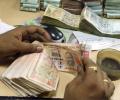
Fall of rupee is not necessarily a bad thing as it will support exports which will help bridge the gap in current account deficit, Chief Executive Officer of Nordea Asset Management Company Allan Polack said.

India's first quarter GDP growth print was 7.9 per cent y-o-y, primarily led by urban consumption demand
